
Oral and maxillofacial surgery
Consultants in oral and maxillofacial surgery (OMFS) diagnose and treat patients with diseases affecting the mouth, jaws, face and neck.
You’ll work with patients of all ages in a rewarding field where treatment to someone’s face can make a huge difference to their quality of life.
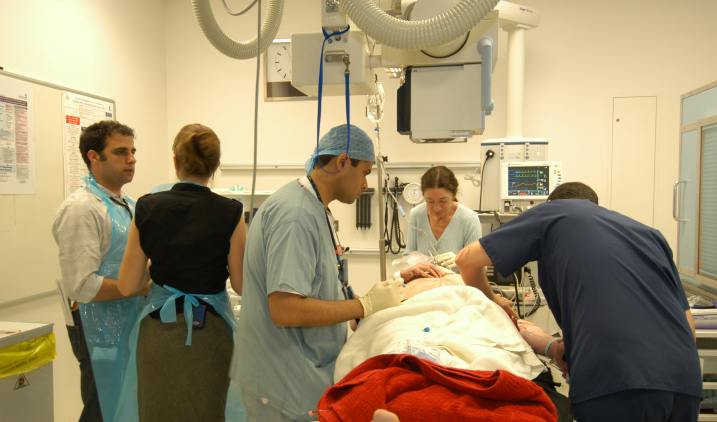
Life as an oral and maxillofacial surgeon
You’ll also deal with the non-surgical management of conditions such as facial pain, disease and infections. Your work will be a mixture of surgery and outpatient clinics and you’ll work alongside other medical and dental specialists.
Your surgery could vary from simple cases like removing a wisdom tooth through to treating skin cancer in a clinic or complex facial reconstruction which can take many hours. Major surgery in OMFS is exciting, and often collaborative, working alongside colleagues such as neurosurgeons and ENT surgeons.
You’ll use the latest techniques including scans to produce 3D models to help you plan surgery and navigate the complex structures of the face and skull. You’ll also use micro-surgical techniques to transfer tissue from one part of the body to another. For example, face transplantation combines facial surgery and anatomy with micro-surgical skills.
Omar Sheikh
Oral and Maxillofacial Surgery trainee
One minute I could be treating a patient a few days old and the next an elderly patient.
How much can I earn?
How about the benefits?
- make a difference
- flexible and part-time working
- high income early in your career
- work anywhere in the world
- excellent pension scheme
- good holiday entitlement
- NHS discounts in shops and restaurants
Must-have skills
- excellent communication skills to manage a wide range of relationships with colleagues, and patients and their families
- emotional resilience, a calm temperament and the ability to work well under pressure
- teamwork and the capacity to lead multidisciplinary teams
- problem-solving and diagnostic skills
- outstanding organisational ability and effective decision-making skills
- first-class time and resource management for the benefit of patients
- a high degree of manual dexterity
- superb hand-eye co-ordination, excellent vision, and visuospatial awareness
- physical stamina to cope with the demands of surgery
Entry requirements
If you already have a degree, you could study for a four-year postgraduate degree in medicine.
You’ll need to pass an interview and admissions test. You’ll be asked to show how you demonstrate the NHS values such as compassion and respect.
Some medical schools look to recruit a mix of students from different backgrounds and geographical areas, so your educational and economic background and family circumstances could be considered as part of your application.
What are my chances of starting a career in OMFS?
There are 383 oral and maxillofacial surgeons working in the NHS in England. In 2020 there were 32 applications for 10 specialty training places.
How to become an OMF surgeon
You must be qualified in medicine and dentistry – the training is long.
Most people - around 75% - train as a dentist first and then train as doctor. But you can do the degrees in either order and there are pros and cons to each approach. See the British Association of Oral and Maxillofacial Surgeons (BAOMS) for more information.
You will need to fund your second degree. There are a small number of BAOMS and NHS bursaries available. Find out more about financial support for medical and dental students.
You will be paid during your specialty training. If coming from a dentistry background, your specialty training will take 13 years after your dental degree. If coming from a medical background, your specialty training will take 11 years after your medical degree.
You may be able to train part time, for example for health reasons or if you have family or caring responsibilities.
Where a career as an OMF surgeon can take you
You could:
- specialise or conduct research in areas such as head and neck cancer, cleft lip and palate surgery, trauma and aesthetic facial surgery
- teach medical students or postgraduate students in training
- get involved in research at universities, the NHS or private sector