
Medical oncology
Medical oncologists are doctors who diagnose, assess, treat and manage patients with cancers.
Your goal is to provide the best possible outcomes for your cancer patients, whether that’s a cure or palliative care.
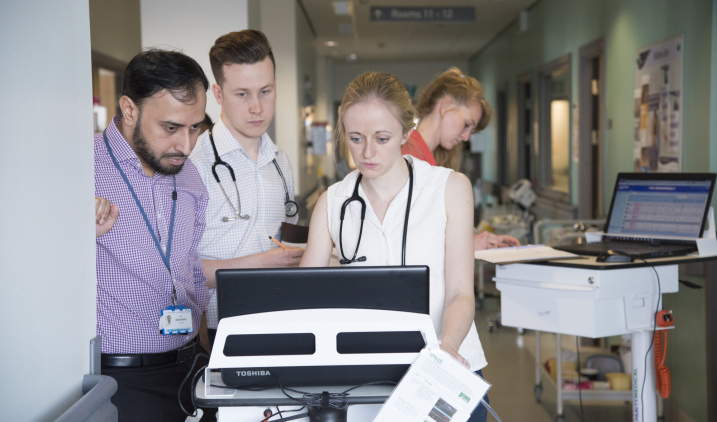
Life as a medical oncologist
Your goal is to provide the best possible outcomes for your cancer patients, whether that’s a cure or palliative care. Whatever the case, you’ll provide treatment and counselling to your patients and their families.
Clinical research is an important part of your role and clinical care, clinical trials, laboratory and translational cancer research will be part of your training.
You’ll be expected to advise your patients on all aspects of their treatment including surgery and radiotherapy as well as having the skills to administer systemic therapies.
Your work will include:
- diagnosing cancers
- discussing treatment options with patients
- arranging and supervising drug treatment and therapies including the management of any complications
- supporting patients and overseeing their care, including after-treatment care
You’ll treat a wide variety of patients from those with localised or metastatic (secondary) tumours to others who will benefit from additional treatment after surgery.
You’ll work as part of a multidisciplinary team, often in partnership with a clinical oncologist, who will treat cancer patients using a combination of chemotherapy and radiotherapy, which separates the role from medical oncologists who use non-radiological treatments.
You’ll treat conditions such as:
- colorectal cancer
- breast cancer
- lung cancer
- upper gastrointestinal (GI) cancer
- ovarian cancer
- tumours of the kidney (urological cancers)
- leukaemia
- melanoma
How much can I earn?
You’ll first earn a salary when you start your foundation training after medical school. The basic salary ranges from £32,398 to £37,303. Once you start your specialty training in the NHS, you can expect to earn a salary of at least £43,923, which can increase to between £93,666 and £126,281 as a consultant.
How about the benefits?
- make a difference
- flexible and part-time working
- high income early in your career
- work anywhere in the world
- excellent pension scheme
- good holiday entitlement
- NHS discounts in shops and restaurants
Must-have skills
- excellent communication skills to manage a wide range of relationships with colleagues, and patients and their families
- emotional resilience, a calm temperament and the ability to work well under pressure
- teamwork and the capacity to lead multidisciplinary teams
- problem-solving and diagnostic skills
- outstanding organisational ability and effective decision-making skills
- first-class time and resource management for the benefit of patients
Entry requirements
Your first step is medical school. Typically, you’ll need excellent GCSEs and three A or A* passes at A level including chemistry for a five-year undergraduate degree in medicine. Many medical schools also ask for biology and others may require maths or physics.
If you already have a degree, you could study for a four-year postgraduate degree in medicine.
You’ll need to pass an interview and admissions test. You’ll be asked to show how you demonstrate the NHS values such as compassion and respect.
Some medical schools look to recruit a mix of students from different backgrounds and geographical areas, so your educational and economic background and family circumstances could be considered as part of your application.
What are my chances of starting a career as a medical oncologist?
There are approximately 485 medical oncologists working in the NHS in England. In 2020, there were 185 applications for 39 specialty training places.
How to become a medical oncologist
After medical school, you’ll join the paid two-year foundation programme where you’ll work in six placements in different settings.
After your foundation programme, you can apply for paid specialty training to become a medical oncologist, which will take a minimum of six years.
You may be able to train part time, for example for health reasons or if you have family or caring responsibilities.
Where a career as a medical oncologist can take you
At the end of your training, you’ll be awarded a CCT (certificate of completion of training). You can apply for consultant roles six months prior to receiving your CCT.
There is no CCT sub-specialty for medical oncology, but most medical oncologists specialise in one to three tumour types including:
- gastrointestinal tract cancers
- urological cancers
- cancers of the blood and lymphatic system
- cancers of the female reproductive system
Some medical oncologists also develop interests in:
- paediatric oncology (diagnosis and treatment of cancer in children)
- palliative care (for patients whose illness cannot be cured)
- the study and application of imaging technologies, such ultrasound, Computed Tomography (CT) Computed Axial Tomography, nuclear medicine, Positron Emission Tomography (PET) and Magnetic Resonance Imaging (MRI) to diagnose or treat cancers
You’ll also have opportunities to conduct research and teach.