
Gastroenterology
Gastroenterologists diagnose, treat and work to prevent gastrointestinal (stomach and intestines) and hepatological (liver, gallbladder, biliary tree and pancreas) diseases.
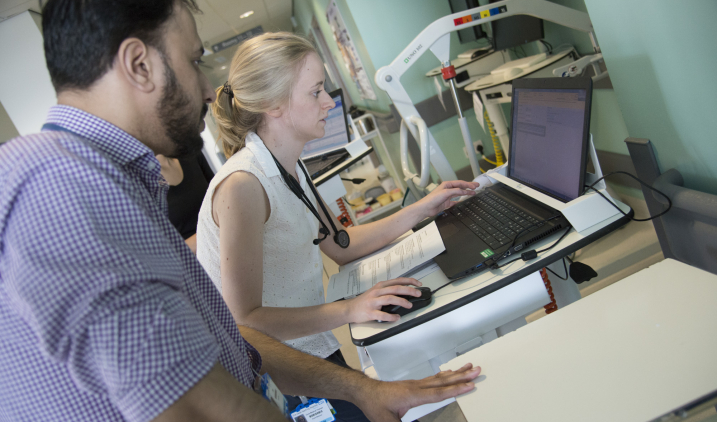
Life as a gastroenterologist
You’ll run endoscopy services. You’ll be expected to perform upper gastrointestinal (GI) examinations and have the opportunity to train in lower GI as well, procedures such as flexible sigmoidoscopy and colonoscopy. You can complete additional training in hepatobiliary endoscopy (ERCP) or small bowel endoscopy, which involves learning wireless capsule endoscopy or enteroscopy.
A typical day may see you perform:
- diagnostic and therapeutic upper and lower gastrointestinal endoscopy
- small bowel endoscopy
- endoscopic retrograde cholangiopancreatography (ERCP) – an endoscopic technique mainly used to diagnose and treat bile duct and pancreatic duct conditions
- endoscopic ultrasound (EUS)
- intestinal and liver biopsy
- paracentesis (puncture of the wall of a cavity using a hollow needle)
- insertion of parenteral nutrition line (intravenous feeding lines)
You'll also plan the aftercare of patients undergoing liver transplant.
You’ll manage patients with acute gastroenterological conditions and treat a wide range of GI diseases.
You’ll regularly treat conditions such as:
- gastrointestinal bleeding
- gastrointestinal cancer
- anaemia – a condition where the haemoglobin the blood (a pigment that carries oxygen) is below normal levels
- inflammatory bowel disease, e.g., Crohn’s disease (inflammation of the lining of the digestive system), ulcerative colitis (inflammation and ulceration of the lining of the rectum and colon)
- short bowel syndrome
- jaundice – a condition where the skin yellows due to an accumulation of bilirubin in the blood and tissues
- management of alcoholic, viral hepatitis (Inflammation of the liver caused by a virus) and autoimmune liver disorders (where the body attacks its own cells)
- diverticulitis - inflammation of the diverticula (small pouches) in the intestine
- gastroenteritis
- hepatitis
How much can I earn?
You’ll first earn a salary when you start your foundation training after medical school. The basic salary ranges from £32,398 to £37,303. Once you start your specialty training in the NHS, you can expect to earn a salary of at least £43,923, which can increase to between £93,666 and £126,281 as a consultant.
How about the benefits?
- make a difference
- flexible and part-time working
- high income early in your career
- work anywhere in the world
- excellent pension scheme
- good holiday entitlement
- NHS discounts in shops and restaurants
Must-have skills
- excellent communication skills to manage a wide range of relationships with colleagues, and patients and their families
- emotional resilience, a calm temperament and the ability to work well under pressure
- teamwork and the capacity to lead multidisciplinary teams
- problem-solving and diagnostic skills
- outstanding organisational ability and effective decision-making skills
- first-class time and resource management for the benefit of patients
Entry requirements
Your first step is medical school. Typically, you’ll need excellent GCSEs and three A or A* passes at A level including chemistry for a five-year undergraduate degree in medicine. Many medical schools also ask for biology and others may require maths or physics.
If you already have a degree, you could study for a four-year postgraduate degree in medicine.
You’ll need to pass an interview and admissions test. You’ll be asked to show how you demonstrate the NHS values such as compassion and respect.
Some medical schools look to recruit a mix of students from different backgrounds and geographical areas, so your educational and economic background and family circumstances could be considered as part of your application.
What are my chances of starting a career as a gastroenterologist?
In 2020, there were 373 applications for 79 specialty training places.
How to become a gastroenterologist
After medical school, you’ll join the paid two-year foundation programme where you’ll work in six placements in different settings.
After your foundation programme, you can apply for paid specialty training to become a gastroenterologist, which will take a minimum of seven years.
You may be able to train part time, for example for health reasons or if you have family or caring responsibilities.
Where a career as a gastroenterologist can take you
Your main focus will be hepatology (diseases of the liver) but as your career develops, you’ll also be able to specialise in:
- hepatology (diseases of the liver)
- pancreaticobiliary diseases (diseases of the pancreas and biliary system)
- inflammatory bowel disease
- functional bowel disease
- tropical diseases
- gastrointestinal cancer and its prevention
- endoscopic surveillance
- upper GI disease (diseases of the oesophagus and stomach)
- small bowel disease
- pancreatic disease
- transplantation
- medico legal issues in medicine
- clinical pharmacology
- inherited cancer syndromes
- clinical nutrition