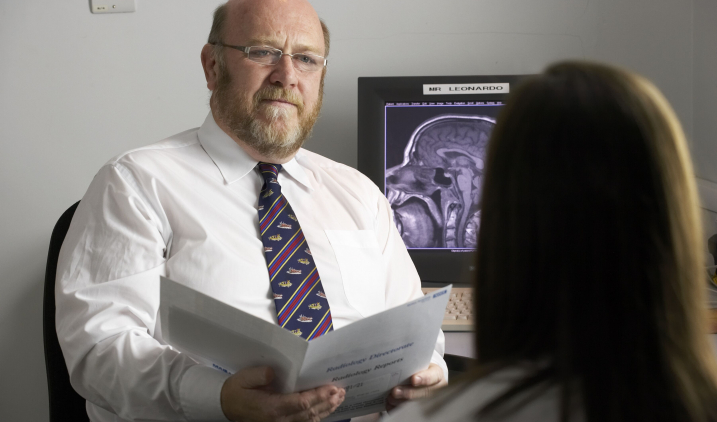
We asked current students to
write a short piece about the considerations they made when
choosing their medical school.
Siobhan Graham, medical
student at Brighton and Sussex Medical School writes:
‘There were a few things which influenced
my decision on which medical school I wished to attend. Firstly I
wanted a medical school away from home that was near to the sea as
I was keen to move out of home and spread my wings. I also wanted
to go to a medical school where dissection was part of the
curriculum as I was keen to learn anatomy hands on. However my
decision of which medical school to attend was most influenced by
the visit I made to the various universities during year 12.
Brighton and Sussex Medical School really stood out for me as it
had everything I wanted on my wish list but also the atmosphere and
vibe I got from both the campus and the student who I met confirmed
to me that this was the university for me.‘
Sophie Kreppel, medical
student at Peninsula Medical School writes:
‘I picked Peninsula Medical School for a
variety of reasons, but the biggest factor was the open day. Unlike
other medical schools’ open days, the tutors at the open day were
extremely enthusiastic, constantly talking to you as if you were
already a student with them, and it was this passion that finally
persuaded me that Peninsula was the medical school for me. As the
medical school was fairly new at this point I felt that the
teachers were very excited and still saw everything as a new
opportunity, and so did not treat the students as numbers.
Obviously another major influencing factor
was the actual curriculum. Peninsula is very clinically based, with
PBL (problem based learning) being a major part of the teaching in
the first couple of years. Obviously this type of learning is not
ideal for everyone, but I enjoy independent learning, and so felt
that this type of teaching was well suited to me. Some do say that
Peninsula students don’t get enough basic science teaching, but I
do not feel this is true and Peninsula graduates seem to be more
capable foundation factors as they start community placements from
the very first year.
When looking into medical schools, as well
as being aware of the curriculum, you should look into the location
of the medical school. As Peninsula is spread over the south west
peninsula it has the added benefit that you experience student life
in two separate cities as well as several community placements over
a vast area, and so you have the opportunity to experience
healthcare in a variety of environments, which will prepare you
well for later on in your career, and so appealed to
me.
When choosing a medical school I recommend
investigating the curriculum, go to the open days, with set
questions in mind that you want answered, and look at the GMC
recommendations about the medical schools. Hopefully by doing this
you will then choose the medical school which suits you.’
Prerana Huddar, medical
student at the University of Edinburgh writes:
‘As an EU student, coming to Edinburgh was
a huge decision. Since it was so far away, I felt that while
attending an open day would be informative, it would simply be too
time consuming. I didn't even know of anyone who had done medicine
at Edinburgh, so all of my research had to be done online. I
scoured the university's website and prospectus for any and all
information that I could obtain about the course. I also went on
websites such as New Media Medicine and The Student Room
where both
prospective applicants and current students discuss what the
university and its course are like. I found this
to be a very useful resource, but you do have to bear
in mind that the
curriculum might have changed, either in content or in delivery,
since the older
students were in first year, so it's always a good idea to refer to
the university's
official website and prospectus. As I later found out for myself,
Edinburgh University have an integrated approach to teaching in the
first two years. You will be attending traditional lectures that
will be complemented by twice-weekly PBL sessions that further
explore the concepts introduced in lectures by means of a small
group of students and a facilitator. Different universities have
different approaches to teaching, so you should be thinking about
the ways in which you learn best. I myself prefer the
integrated method,
as the lectures ensure that you learn the right things, and that
everyone has the
same kind of knowledge base when tackling PBL cases. And if you
have any problems understanding a concept, PBL sessions are a
useful platform to discuss the topic with your peers when you might
have been reluctant to do so otherwise. Different people get to
grips with different topics more easily than others, so it
encourages everyone to teach and learn from each
other.
We also had Anatomy about once a week. Edinburgh teaches anatomy
through prosections (where the anatomists have
laid out whatever they want you to concentrate on for
that session, as
opposed to a dissection-based approach, which means that you need
to hack and slash
to get to the bits you want). Both have their pros and cons (with
prosections, you may be saving time and will be
able to see things more clearly as experts will have
cut the section
properly, whereas with a more dissection-based approach, I guess
you can really
appreciate the many layers of the human body!) but the thing that I
like about anatomy
at Edinburgh is that the anatomists co-ordinate their teaching with
the other departments (eg, pathology,
biochemistry etc) and so everything you learn throughout
the course is
linked, which helps you to understand the course content a whole
lot better. During the first semester of first year, they teach you
the basic science you need to know in order to tackle the
rest of the course. It's a little haphazard (I found
myself wondering if
I was studying medicine or biology!) but it all falls in place
towards the end of
the semester, so you need to be a little patient. However the first
year first semester
curriculum has been revamped following feedback from students, and
the current set of
first years say that lecture orders flow beautifully and that
there's a good amount of references to
clinical medicine, so that shouldn't be an issue any more.
The second semester
is a lot more fun. You learn about various systems (first
cardiovascular, then respiratory and then
bones and joints) and have practicals thrown in.
One of the things that caught me off-guard though, is the sheer
amount of psychosocial topics included in the
curriculum. However through activities such as "Talking with
Families" and "Health Needs of Older People"
where you interview mothers with young children and
elderly couples
respectively, you find yourself thinking about the lecture content
a lot, which shows
that it is very much pertinent to the study of medicine.
Last but not least, you need to consider the city you'll be living
in and how much it's going to cost you; you are
going to be living there for 5 to 6 years, after all! I
didn't want to move
to a small town, and neither did I want to live in as huge a city
as London, so
Edinburgh seemed the perfect fit. The people are really friendly as
well, and there's always something going on, so
make sure to put down your books every once in a while
and enjoy what
Edinburgh has to offer. I don't regret choosing Edinburgh at all,
and neither will
you if you end up studying here.’
*Please note the content and
opinions expressed in all case studies are those of the writer and
do not necessarily reflect the views of NHS Medical
Careers.